
You Probably Don’t Need More Plants. You Need a Better Landscape Plan.
There is a very specific moment that happens in landscaping.
You stand in the yard, stare at a space you do not like, and decide the answer is probably another plant.
So you buy one.
Then maybe three more.
Then a hydrangea because obviously that felt necessary.
And somehow, after all that, the space still does not feel finished.
That is usually because the problem was never that you needed more plants.
You needed a better plan.
Plants are the finishing pieces. They are not the whole design.
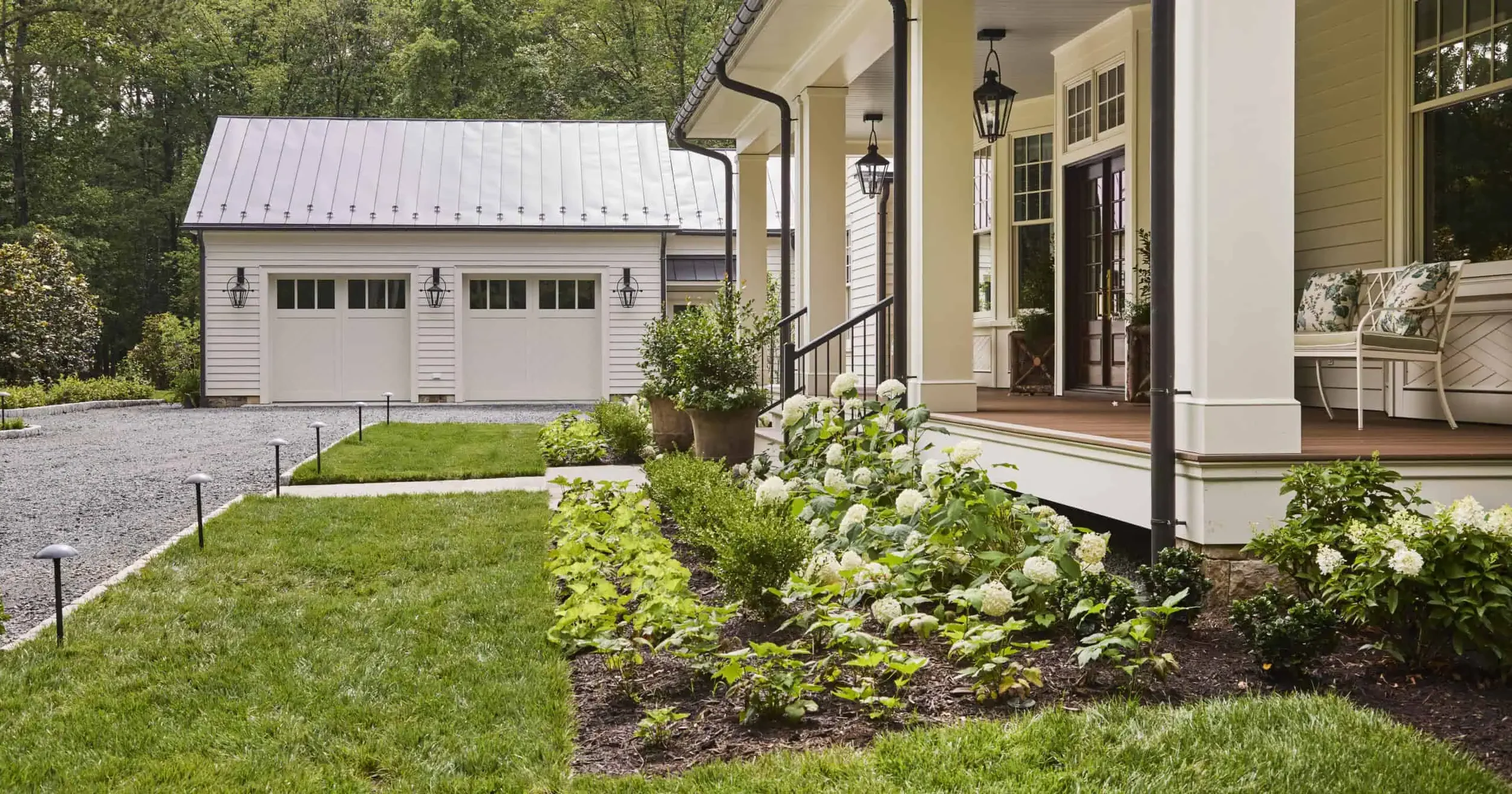
Image via Southern Living Plants, Southern Living Idea House 2025.
A good landscape starts before you choose a single plant.
When I look at a property, I am not starting with the question:
What should we plant here?
I am looking at the bigger picture first.
Where does the eye go when you pull into the driveway?
Does the front walkway feel natural?
Are the beds the right shape and scale for the house?
Does the landscape feel balanced?
Are there areas that need screening?
Do you have enough structure to carry the space through winter?
Where does water move?
What spaces should feel open, and which ones should feel tucked away?
Only after those questions are answered do the plants really start to matter.
That is the difference between decorating a yard and designing a landscape.
Scale is usually the first thing that goes wrong.
One tiny shrub floating in a giant mulch bed is not doing anybody any favors.
Neither is a row of plants spaced so far apart that everyone looks like they are waiting for the bus.
One of the biggest things a landscape plan helps with is scale.
Plants need to relate to:
the size of the house
the depth of the bed
the height of nearby architecture
each other
and their eventual mature size
A landscape should feel substantial enough to belong to the property.
Not like somebody panicked at the garden center and bought whatever was on sale.
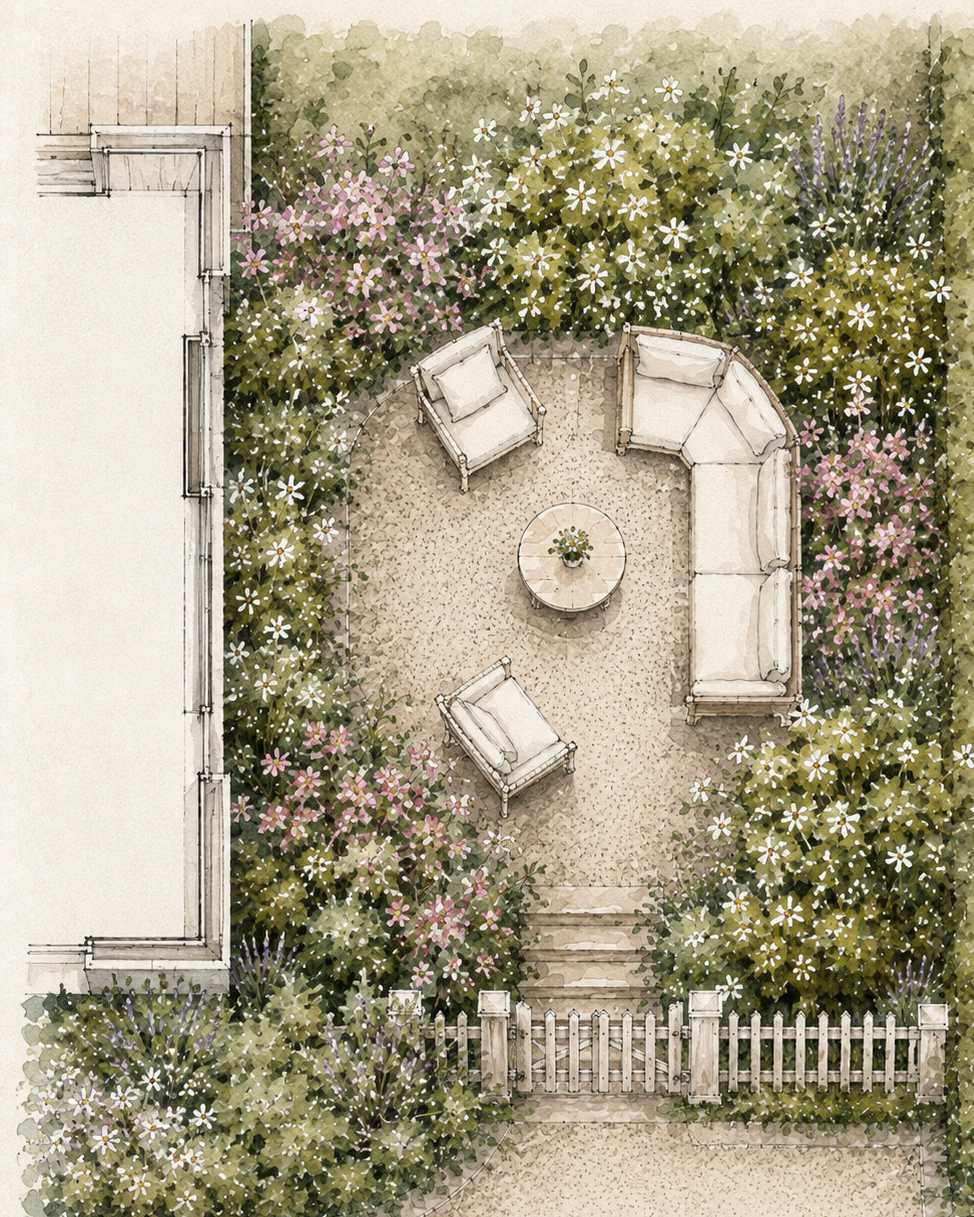
Preliminary planting plan, Santa Rosa Beach, FL tree house.
A good planting plan considers spacing, scale, repetition and how the landscape will mature over time.
Repetition is your friend.
People often think a designed landscape means using a huge variety of plants.
It usually means the opposite.
Repetition is what gives a garden rhythm.
Repeating the same shrub, ornamental grass, groundcover or perennial in the right places creates consistency and helps connect different areas of the property.
That does not mean every bed needs to look identical.
It means the landscape should feel related.
Think cousins, not complete strangers.
Structure matters more than people realize.
This is one of my favorite things to explain because it is what makes a landscape feel good even when nothing is blooming.
Evergreens, hedges, trees, walls, pathways, stone, edges and larger structural plantings are what hold the garden together.
Flowers are wonderful.
I clearly have no issue with flowers.
But if the landscape only works when everything is blooming, the design is doing too little.
A strong garden still has shape in February.
That matters in Kentucky, where you are going to be looking at the bones of the landscape for a good chunk of the year.
A beautiful garden should not completely disappear when the hydrangeas go to sleep.
Your house is part of the landscape.
This sounds obvious, but it gets forgotten constantly.
The architecture should influence the landscape design.
A traditional brick home wants something different from a contemporary home.
A cottage can handle softness, layering and a little bit of wandering.
A more formal property may want stronger symmetry and cleaner structure.
The materials matter too.
Brick.
Stone.
Siding color.
Window placement.
Porch columns.
Walkways.
The landscape should feel like it grew out of the architecture, not like it was delivered separately.
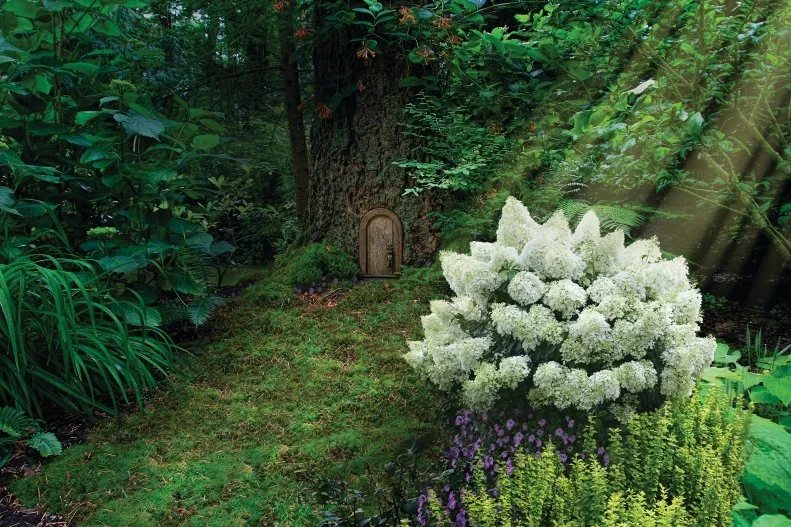
Photo by Barry Block, via HGTV
A plan also keeps you from wasting money.
This is the part nobody talks about enough.
Random plant buying gets expensive.
Replacing things that were planted in the wrong light gets expensive.
Moving shrubs because they outgrew the space gets expensive.
Fixing a bed because the shape never made sense gets expensive.
A thoughtful landscape plan helps you spend money once instead of spending it three times while slowly figuring out the design through trial and error.
And no, the plan does not mean you have to install everything at once.
Actually, one of the biggest advantages of having a plan is that you can phase the project intelligently.
You can do the front this year.
The side yard next year.
The outdoor living area after that.
But everything still works toward the same end result.
This is why I love garden plans.
A good garden plan gives you direction without taking away your ability to make the space your own.
It tells you what goes where.
Why it goes there.
How much you actually need.
How the plants relate to each other.
And what the finished space should feel like.
For someone who loves doing the installation themselves, that can be enough.
For larger projects, it becomes the foundation for the rest of the exterior design.
Either way, it gets you out of the cycle of buying more plants and hoping the yard somehow organizes itself.
Because it will not.
The hydrangeas are talented, but they cannot carry the entire project.
Start with the plan.
If your landscape feels unfinished, disconnected or like it keeps swallowing money without ever looking right, the next step probably is not another trip to the garden center.
It is stepping back and looking at the whole property.
Then making a plan for it.